How to Install FreeDoor2.4.6.8: Complete Setup Guide for Windows, Mac, and Linux

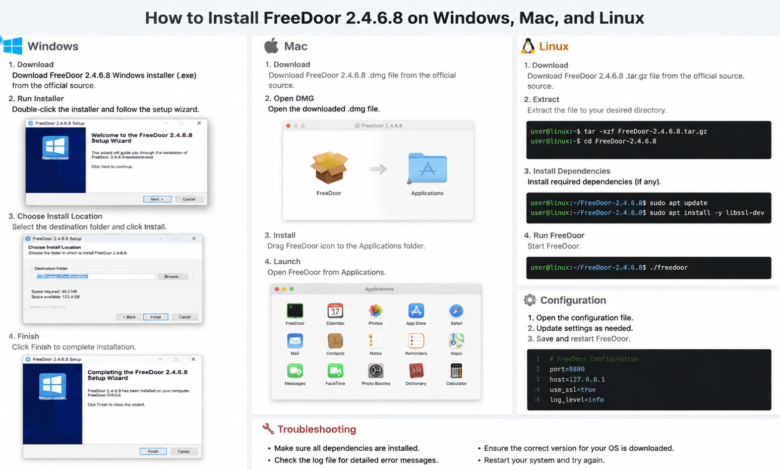
This complete guide explains how to install freedoor2.4.6.8 on Windows, macOS, and Linux systems. It covers system requirements, safe downloading methods, installation steps, first-time configuration, common errors, and security practices. Following the correct procedure ensures that the software works properly without unnecessary risks.
What Is FreeDoor2.4.6.8?
FreeDoor2.4.6.8 is a portable proxy and tunneling application that helps users connect to the internet through encrypted routes. It creates a secure tunnel between the user’s device and a server, allowing internet traffic to pass through protected connections.
The main purpose of FreeDoor is to provide privacy, improve accessibility, and help users overcome network restrictions. Version 2.4.6.8 is popular because of its improved stability, simple interface, and low system resource usage.
Before learning how to install freedoor2.4.6.8, users should understand some important features:
- Lightweight performance: The software uses minimal CPU and RAM resources, allowing it to run smoothly in the background.
- Portable operation: In many cases, users can extract the application and run it without a traditional installation process.
- Automatic configuration: The tool can automatically adjust proxy settings on supported systems.
- Anonymous browsing: It helps hide the user’s original IP address from websites and online services.
- Firewall bypass support: It is designed to help users access connections that may be restricted by network filters.
System Requirements Before Installation
Before starting the process of how to install freedoor2.4.6.8, it is important to confirm that your device meets the necessary requirements.
The basic requirements include:
- Windows: Windows 7, Windows 8, Windows 10, or Windows 11 (64-bit recommended)
- macOS: macOS 10.13 or newer versions
- Linux: Ubuntu 18.04+ or similar Linux distributions
- RAM: Minimum 512 MB free memory, although 1 GB or more is recommended
- Storage: Around 50–100 MB available disk space
- Internet connection: Required for downloading and connecting to servers
- Administrator access: Required on Windows for proper permissions
Using FreeDoor2.4.6.8 on an unsupported operating system may result in installation problems, connection failures, or software errors.
Where to Download FreeDoor2.4.6.8 Safely
A major step in how to install freedoor2.4.6.8 is downloading the correct and secure version. Users should avoid unknown websites because some third-party sources may include modified files, unwanted programs, or harmful software.
Follow these safety guidelines:
- Download FreeDoor2.4.6.8 only from the official website or verified sources.
- Check whether the download page provides an SHA-256 checksum.
- Compare the checksum with your downloaded file before installation.
- Avoid websites with excessive advertisements or forced downloads.
- Scan the downloaded file using antivirus software.
- Never disable security software just to install the application.
A verified download reduces security risks and prevents installation failures.
How to Install FreeDoor2.4.6.8 on Windows
Windows users usually have the easiest installation process. The following steps explain how to install freedoor2.4.6.8 on a Windows computer.
Step 1: Download the Windows Version
Download the FreeDoor2.4.6.8 setup file from a trusted source. The file may appear as:
- FreeDoor2.4.6.8_Setup.exe
- freedoor2.4.6.8.zip
Save the file in an easily accessible location, such as the Downloads folder.
Step 2: Extract or Run the Installer
If the file is compressed in ZIP format, right-click and select “Extract All.” Open the extracted folder and locate the setup file.
Right-click the installer and choose Run as Administrator. This allows the application to configure network settings correctly.
Step 3: Complete the Setup Process
Follow the installation wizard:
- Accept the End User License Agreement.
- Select the installation location.
- Choose required features.
- Click the Install button.
- Wait for the installation process to finish.
The setup normally takes a few minutes depending on your computer performance.
After completion, open FreeDoor2.4.6.8 and check the About section to confirm that the installed version is correct.
How to Install FreeDoor2.4.6.8 on macOS
The process of how to install freedoor2.4.6.8 on macOS is slightly different from Windows.
Follow these steps:
- Download the macOS version from the official source.
- Open the downloaded DMG or PKG file.
- If using a DMG file, drag the FreeDoor icon into the Applications folder.
- Open Finder and launch FreeDoor2.4.6.8.
- If macOS blocks the application, open Security and Privacy settings and allow the application manually.
- Approve any network permissions requested by the software.
After opening, FreeDoor will automatically configure supported proxy settings.
How to Install FreeDoor2.4.6.8 on Linux
Linux users can complete how to install freedoor2.4.6.8 through terminal commands.
For Debian or Ubuntu systems, use:
sudo dpkg -i freedoor2.4.6.8.debFor RPM-based systems such as Fedora or CentOS, use:
sudo rpm -i freedoor2.4.6.8.rpmUsers may need additional dependencies before installation. Updating the package manager first can prevent errors.
After installation, launch FreeDoor from the application menu or terminal and confirm the version number.
First-Time Configuration After Installation
After completing how to install freedoor2.4.6.8, users should perform some important configuration steps.
Recommended settings include:
- Check for software updates.
- Perform an initial connection test.
- Confirm that internet traffic is routing correctly.
- Adjust language and region settings.
- Enable automatic startup if continuous protection is required.
- Configure browser proxy settings manually if automatic setup does not work.
For manual browser configuration, users can use:
Proxy address: 127.0.0.1
Port: 8580
Common Installation Problems and Solutions
During how to install freedoor2.4.6.8, users may experience common errors.
Permission Error on Windows
Run the installer as administrator. Avoid opening the installer directly without proper permissions.
Connection Failure
Check your internet connection and ensure that firewall or antivirus software is not blocking FreeDoor.
Corrupted Download
Delete the downloaded file and download it again from a verified source. Checking the SHA-256 checksum can confirm file integrity.
macOS Security Warning
Allow the application through Security and Privacy settings if Gatekeeper blocks it.
Linux Dependency Issues
Install missing dependencies and retry the installation process.
Security Tips After Installing FreeDoor2.4.6.8
After completing how to install freedoor2.4.6.8, maintaining safe usage is important.
Follow these practices:
- Keep the software updated.
- Avoid modified or cracked versions.
- Do not run multiple proxy tools together.
- Regularly check logs and security settings.
- Download updates only from trusted sources.
Frequently Asked Questions (FAQs)
What is FreeDoor2.4.6.8 used for?
FreeDoor2.4.6.8 is used for encrypted connections, privacy protection, and improving internet accessibility in restricted environments.
Is FreeDoor2.4.6.8 available for Windows, Mac, and Linux?
Yes, FreeDoor2.4.6.8 supports Windows, macOS, and Linux platforms.
Is administrator access required for installation?
Windows users usually need administrator permissions because the software may configure network settings.
How long does FreeDoor2.4.6.8 installation take?
The installation usually takes a few minutes depending on system speed.
Why does FreeDoor2.4.6.8 fail to connect after installation?
Connection problems may occur because of firewall restrictions, incorrect settings, or damaged installation files.
Conclusion
Learning how to install freedoor2.4.6.8 is simple when users follow the correct steps. The process involves downloading the software safely, checking system requirements, completing installation, and configuring settings properly.
Whether you use Windows, macOS, or Linux, following this guide helps ensure a smooth setup experience. Always download from trusted sources, keep the software updated, and follow security practices for better performance and protection.